


Cheap and Low-Interest Loans with Bad Credit: Myths, Mechanics, and Realistic Expectations

Search queries like cheap loan bad credit or cheapest loan for bad credit reveal a clear intent. A borrower looks for relief without adding pressure. The promise sounds simple – low-cost money despite a weak credit profile.
Years of analyzing loan offers, underwriting rules, and borrower outcomes show a different picture. Pricing follows risk, not intent. That gap between expectation and reality explains why many borrowers accept loans that solve a short-term problem but create a longer-term burden.
This guide breaks down the myths, explains how pricing actually works, and sets realistic expectations for anyone searching for a low cost loan for bad credit.
Why the idea of "cheap" breaks in bad credit lending
The word "cheap" suggests a universal standard. Lending does not use that logic.
Every loan sits inside a risk-based pricing model. Credit score, income stability, repayment history, and existing debt define the risk. A borrower with poor credit signals a higher probability of missed payments. Lenders adjust pricing to compensate.
That adjustment shifts the baseline. What counts as a low-interest loan, bad credit does not match rates available to prime borrowers. A borrower expecting low APR enters the wrong reference frame. In subprime segments, "low interest" means not more than competing high-risk offers, not objectively low.
Myth 1: The cheapest loan is just a matter of searching harder
Search engines reinforce this belief. Thousands of pages promise access to the cheapest loan for bad credit with fast approval and minimal checks.
The assumption behind that search is flawed. Loan pricing does not behave like retail pricing. It does not drop because someone compares more options. Rates cluster within a narrow band defined by risk tier. Two lenders may differ by a few percentage points. That difference matters, but it does not transform the cost structure.
A deeper search improves transparency and suitability. It does not rewrite risk pricing.
What lenders actually price when approving a loan
Approval decisions rely on probability models, not simple credit score thresholds. A lender evaluates income consistency first. A stable paycheck reduces uncertainty more than a marginal credit score improvement.
Debt-to-income ratio follows. High existing obligations signal limited repayment capacity. This factor often shapes loan size more than interest rate. Also, behavioral signals matter. Frequent overdrafts, late payments, or irregular deposits increase perceived risk. Loan purpose also plays a role. Consolidation loans sometimes receive slightly better terms because they reduce overall debt complexity.
These variables explain why two borrowers with similar scores receive different offers.
Myth 2: Low-interest offers exist for all borrowers
Marketing language often suggests universal access to a low interest loan bad credit product.
In practice, interest rates follow a floor defined by three forces:
- Risk premium – higher probability of default requires compensation
- Operational cost – underwriting, servicing, and compliance create fixed expenses
- Capital cost – lenders pay for access to funds they lend out
These components create a minimum pricing threshold. No lender operates below that level for high-risk borrowers. When an offer claims rates far below market averages, hidden costs usually appear elsewhere. Origination fees, late penalties, or variable rate structures often offset the headline number.
Expert insight
The lowest advertised rate rarely reflects the final contract. Underwriting adjusts pricing after verification. Focusing only on the headline APR leads to predictable disappointment.
Myth 3: All bad credit loans are predatory
This belief grows from real negative experiences. High-cost payday products and opaque contracts damage trust. At the same time, regulated lenders operate under strict disclosure rules. They present full cost breakdowns, fixed repayment schedules, and clear penalty structures.
The key distinction lies in transparency.
A responsible low cost loan for bad credit includes a predictable payment plan and full cost visibility before signing. A problematic loan hides cost layers or uses compounding penalties that escalate quickly. Understanding that difference helps filter offers without rejecting the entire market.
What a "low cost loan for bad credit" actually looks like
A realistic definition includes several characteristics.
Interest rates fall within the lower end of the subprime range. They do not match prime loans but sit below high-risk extremes.
Fees remain visible and fixed. No unexpected charges appear after approval.
Repayment follows a structured schedule with equal installments. This allows planning and reduces uncertainty.
Penalty rules remain clear and limited. Late fees exist, but they do not compound into exponential growth.
This structure does not eliminate cost. It creates predictability, which is more valuable in unstable financial situations.
The hidden cost of focusing only on monthly payments
Many borrowers evaluate loans based on monthly affordability alone. Lower payments often come from longer repayment periods. This reduces immediate pressure but increases the total repayment amount.
A borrower may accept a loan that feels manageable each month but ends up paying significantly more over time. Total cost matters more than monthly comfort. Evaluating both prevents long-term financial strain.
Why urgency leads to expensive decisions
Search behavior reveals emotional pressure. Queries like cheap loan bad credit often come from urgent situations.
Urgency changes decision patterns.
Approval speed becomes the priority; cost analysis fades. The first available offer looks like the best option. Lenders understand this behavior. Fast approval systems often come with higher pricing because speed carries a premium. Slowing down even slightly changes outcomes; comparing two or three verified offers often reduces cost meaningfully.
A borrower entering this market needs a calibrated view of outcomes. The cheapest loan for bad credit will still carry higher rates than standard personal loans. That gap reflects structural risk, not unfair treatment. Approval depends on more than credit score. Income stability and existing obligations influence decisions heavily. Loan size may be limited. Lenders reduce exposure when risk is high.
Understanding these constraints prevents frustration and improves decision quality.
Practical ways to reduce loan costs before applying
Even within high-risk categories, small adjustments improve loan terms.
Stabilizing income for several months strengthens application quality.
Reducing existing balances lowers the debt-to-income ratio. This can shift pricing slightly downward.
Correcting errors in credit reports removes artificial risk signals.
Choosing a secured loan reduces lender exposure and often results in better rates.
These actions do not create a cheap loan in the traditional sense. They move the offer toward the lower end of the available range.
Also, not every financial gap should be solved with borrowing. If repayment depends on uncertain future income, the loan introduces more risk than relief. If existing debt already consumes a large share of income, adding another obligation increases the chance of default.
If the total repayment cost exceeds the value of the problem being solved, borrowing becomes inefficient. Recognizing these conditions prevents escalation into greater financial difficulty.
Building a smarter decision filter
A structured filter replaces emotional decision-making.
A loan qualifies only if:
- It fits within verified disposable income
- The total repayment remains manageable over time
- Terms remain transparent and fixed
- The loan solves a defined financial need
This filter removes offers that look attractive at first glance but fail under closer analysis.
Conclusion: redefining "cheap" in a risk-based system
The search for a cheap loan bad credit reflects a legitimate need. The expectation behind it often conflicts with how lending systems operate.
A low interest loan bad credit exists only within the limits set by risk pricing, focuses on predictability and transparency rather than absolute affordability. Understanding these boundaries transforms borrowing decisions. It shifts the focus from finding an unrealistic deal to choosing the most sustainable option available.
That shift determines whether a loan supports recovery or creates a deeper financial problem.
Frequently Asked Questions
What is the cheapest loan for bad credit?
The cheapest option sits at the lower end of subprime rates with transparent fees and structured repayment. It does not match prime market rates.
Can a borrower with bad credit get a low-interest loan?
Yes, but "low interest" is relative to high-risk segments. High income and low existing debt improve chances.
Why are bad credit loans expensive?
Higher default risk, operational costs, and capital expenses create a pricing floor that cannot be removed.
How to find a low-cost loan for bad credit?
Compare regulated lenders, review total repayment cost, and avoid offers with unclear fee structures.

Denis Goncharenko
Denis is a seasoned financial journalist and content strategist with over 15 years of experience driving editorial excellence in high-stakes digital media. Specializing at the intersection of traditional finance and emerging technologies, he has spent the last 8+ years as the Managing Editor for Cryptonews.net, overseeing market analysis, regulatory breakdowns, and institutional tech trends. Recognized by global Web3 and fintech leaders for his rigorous fact-checking and editorial standards, Denis excels at translating complex financial data, decentralized finance (DeFi) frameworks, and digital asset market dynamics into high-trust, authoritative content. His deep expertise in tech-driven financial ecosystems makes him a key voice in navigating YMYL (Your Money or Your Life) content strategy and maintaining strict editorial integrity. Core Competencies: FinTech Journalism, Digital Asset Markets, DeFi & Web3 Analytics, Financial Technology Trends, FinTech Regulation & Compliance. Editorial & E-E-A-T Strategy: YMYL Content Strategy, Financial Fact-Checking, Editorial Management, Data-Driven Content Architecture, Risk-Mitigated Copywriting.
To authorWas this article helpful?
Same blogs
Avoid These Scams: Advance‑fee Loans, "Guaranteed approval", Fake calls/texts
Learn how bad credit loan scams work and how to identify advance-fee fraud, fake guarantees, and impersonation tactics.
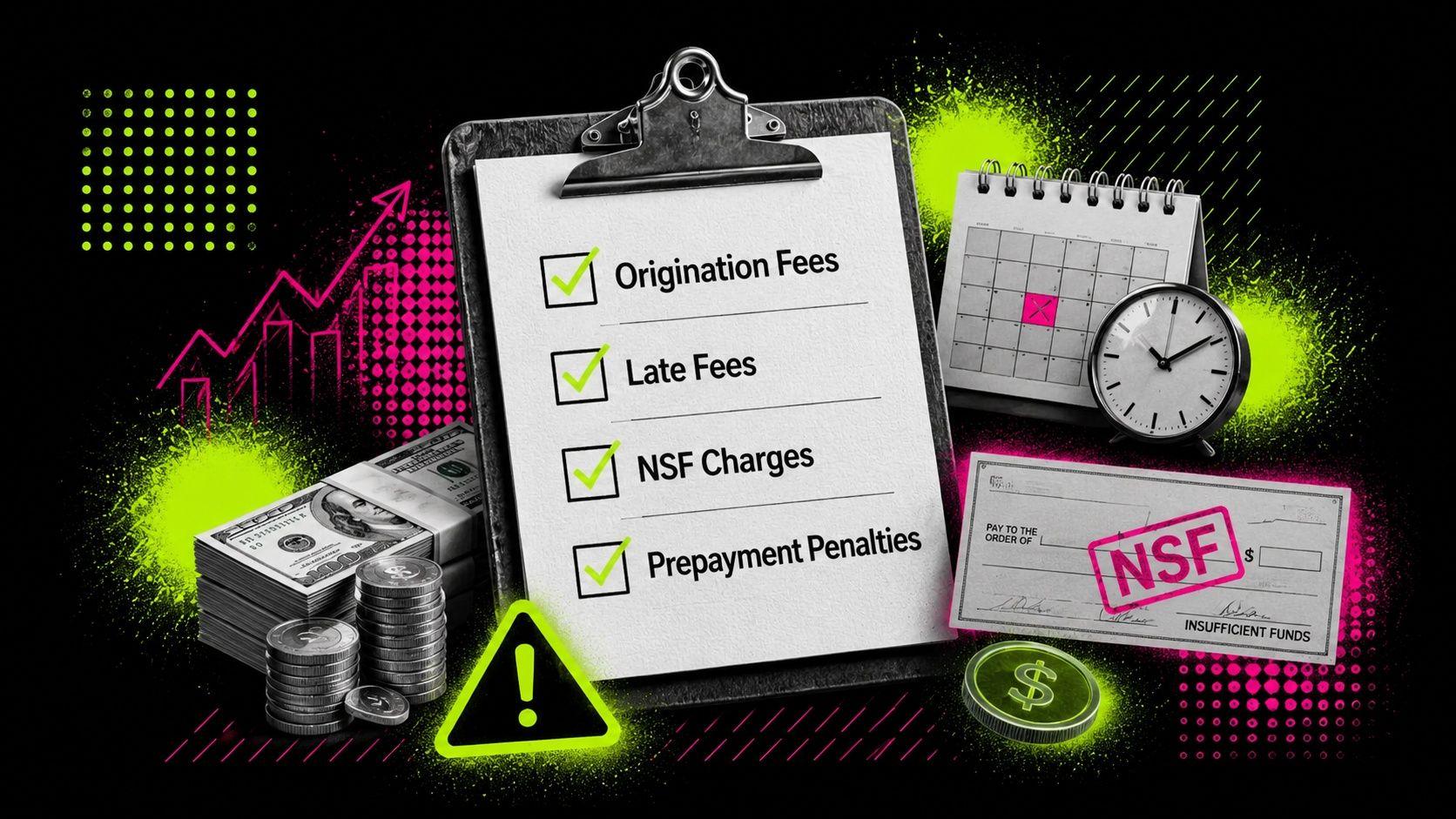
Fee Checklist for Bad Credit Loans: Origination Fees, Late Fees, NSF Charges, and Prepayment Penalties
Hidden fees in bad credit loans often cost more than the interest rate itself. Learn how to spot them.

Bad Credit Loan Costs Explained: APR, Fees, Total Cost, and How to Compare Offers
Discover how APR, fees, and repayment terms shape bad credit loan costs and learn to compare offers effectively.