
Bad Credit Loan Costs Explained: APR, Fees, Total Cost, and How to Compare Offers

Most borrowers searching for bad credit financing focus on one number first: the monthly payment.
Lenders understand that psychology perfectly.
A smaller payment creates emotional relief during financial stress. The problem arises later, when borrowers discover that low monthly payments often conceal larger interest charges, expensive fees, and repayment timelines that stretch years longer than expected.
After reviewing hundreds of bad credit loan agreements, lender disclosures, and refinancing cases across the U.S. market, one pattern emerges repeatedly: borrowers are rarely trapped by the loan amount itself. They get trapped by the structure surrounding the loan.
APR, origination fees, rollover charges, repayment timelines, and penalty structures shape the real borrowing cost.
Understanding those details changes everything, especially for borrowers comparing bad credit loan rates under financial pressure.
Why Bad Credit Loans Cost More
Lending always revolves around risk. A borrower with missed payments, collections, charge-offs, or high credit utilization represents a higher default probability in the lender's underwriting model. Lenders compensate for that risk by increasing pricing.
That increase appears through:
- Higher APRs
- Larger fees
- Stricter repayment schedules
- Automatic payment requirements
- Shorter repayment timelines
Traditional banks often avoid high-risk borrowers entirely. Online lenders and alternative finance companies accept more applications but charge more for the added exposure.
That structure explains why loan rates for bad credit frequently look dramatically different from rates advertised to prime borrowers.
A borrower with excellent credit may qualify for single-digit APRs. A borrower rebuilding after financial hardship may receive offers above 30%. The difference compounds quickly over time.
APR: The Number Borrowers Misunderstand Most
APR stands for Annual Percentage Rate.
This figure combines the loan's interest rate with certain lender fees into one standardized borrowing cost. APR matters because it reveals the loan's real annual expense more accurately than the interest rate alone. Many borrowers focus on monthly payments instead. That mistake creates expensive outcomes.
Consider two loan offers:
Loan A carries a 15% APR over three years. Loan B carries a 28% APR over six years.
Loan B may advertise a lower monthly payment because the repayment stretches across more months. The total borrowing cost still ends much higher.
APR exposes that difference immediately.
A borrower comparing a low APR loan for bad credit offers should always examine the APR before reviewing the monthly payment size.
Why Monthly Payments Can Mislead Borrowers
Lenders reduce monthly payments in two primary ways:
- Lower the interest rate
- Extend the repayment timeline
Only one of those changes lowers borrowing cost directly. Long repayment periods spread debt across additional months. Interest continues accumulating during that time.
A $5,000 loan repaid over seven years often costs far more overall than a shorter loan with slightly larger monthly payments. Borrowers under financial pressure naturally prioritize immediate affordability. That instinct makes sense. The danger appears when short-term relief creates long-term debt expansion.
The safest comparison always includes total repayment cost, not just monthly obligations.
Origination Fees: The Hidden Loan Reduction
Origination fees create one of the least understood costs in bad credit lending.
Many lenders deduct these fees before sending loan funds.
A borrower approved for $10,000 with a 9% origination fee receives only $9,100 while repaying the full $10,000 balance plus interest. That structure changes the effective borrowing cost dramatically.
Some lenders justify origination fees as compensation for underwriting risk and processing expenses. The borrower still absorbs the financial impact immediately.
Origination fees matter even more when borrowers compare the cheapest loan for bad credit options because some lenders advertise lower rates while quietly increasing upfront fees.
A lower APR does not always guarantee a cheaper loan.
Late Fees and Penalty Structures
Late fees vary widely between lenders. Some charge flat fees between $15 and $40. Others calculate penalties as percentages of missed payments.
One missed payment also creates secondary consequences:
- Credit score damage
- Collection activity
- Higher future borrowing costs
- Possible overdraft fees from failed autopay withdrawals
Repeated late payments sometimes trigger default interest rates that increase loan pricing further. Borrowers should examine penalty language carefully before signing agreements. Collection procedures matter just as much as advertised rates. That difference matters during temporary cash flow disruptions.
Fixed Rates vs. Variable Rates
Most personal installment loans use fixed rates. The payment remains stable throughout repayment.
Variable-rate loans change based on broader interest rate conditions or lender formulas. Borrowers with damaged credit should approach variable structures carefully.
A loan starting at 18% APR may rise substantially during repayment if benchmark rates increase. Fixed-rate loans provide predictability. Predictability matters when budgets already operate under pressure. Some lenders advertise low initial rates that adjust later. Reading the full rate disclosure prevents unpleasant surprises after approval.
The Real Difference Between Payday Loans and Installment Loans
Many borrowers searching for low-interest loan bad credit options compare payday products against installment loans.
The repayment structure changes the risk profile dramatically. Payday lenders often require full repayment within weeks. Installment loans spread repayment across months or years.
That longer structure lowers immediate payment pressure. Still, installment loans vary widely in quality. A high-interest installment loan with excessive fees still creates long-term financial strain. The loan simply stretches that strain across more time.
Borrowers should never assume "installment" automatically means affordable.
How Loan Terms Change Total Borrowing Cost
Repayment length influences total interest more than many borrowers realize.
A longer loan term lowers monthly obligations but increases cumulative interest charges.
Consider a borrower financing $8,000.
A three-year repayment structure produces higher monthly payments but lower total interest than a seven-year repayment structure at the same APR. Lenders understand that borrowers often prioritize immediate affordability over total repayment cost. Marketing materials frequently emphasize monthly savings while minimizing long-term expense.
That strategy works because financial stress narrows focus toward short-term survival. The math still matters.
Why "No Credit Check" Loans Often Cost More
No credit check advertising attracts borrowers who have experienced repeated denials.
Those products usually compensate for elevated lender risk through aggressive pricing. Higher APRs, larger fees, collateral requirements, or shorter repayment schedules appear frequently in these loans.
Legitimate lenders still evaluate repayment ability even when traditional credit scoring plays a smaller role. Income verification, bank account analysis, and employment review often replace formal credit underwriting.
The absence of a credit check does not eliminate financial risk. It usually shifts risk pricing elsewhere inside the agreement.
Comparing Loan Offers the Right Way
Most borrowers compare loans emotionally instead of mathematically.
The strongest comparison process focuses on five numbers:
- APR
- Total repayment amount
- Monthly payment
- Loan term
- Total fees
Those details reveal the real borrowing cost faster than advertising language ever will. A loan with a slightly higher monthly payment sometimes saves thousands overall because repayment ends earlier or fees stay lower.
The strongest borrowers ignore marketing slogans and calculate actual repayment outcomes directly. Fast money becomes expensive money surprisingly often.
Secured Loans vs. Unsecured Loans
Secured loans require collateral. Unsecured loans do not. Collateral lowers lender risk, which sometimes reduces APR.
Common collateral includes:
- Vehicles
- Savings accounts
- Certificates of deposit
- Valuable personal property
The lower pricing comes with higher consequences. Missing payments on secured loans risks repossession or asset seizure. Borrowers dependent on vehicles for employment should examine title-secured products carefully before signing agreements.
Unsecured loans usually carry higher rates because the lender absorbs greater default exposure. Choosing between the two depends on repayment stability, asset protection priorities, and long-term financial risk tolerance.
Refinancing Expensive Bad Credit Loans
Many borrowers refinance after improving their credit profiles or stabilizing their income.
Refinancing replaces an existing loan with a new structure carrying different terms. Successful refinancing lowers APR, reduces total repayment cost, or improves cash flow stability.
The strongest refinance opportunities appear after:
- Consistent on-time payments
- Reduced revolving debt
- Improved income stability
- Lower debt-to-income ratios
Borrowers should still compare refinancing fees carefully. Some lenders attach new origination charges that reduce the value of lower interest rates. The best refinancing outcomes improve both short-term affordability and long-term cost simultaneously.
The Bottom Line
Bad credit loans cost more because lenders price risk aggressively. That reality does not mean every high-cost loan becomes predatory or every low-payment loan becomes affordable.
APR, fees, repayment timelines, and penalty structures determine the real borrowing cost.
Borrowers who focus only on monthly payments often miss the details that matter most. Borrowers who compare total repayment amounts, fee structures, and repayment flexibility usually avoid the worst financial outcomes.
The cheapest loan for bad credit rarely comes from flashy advertising or guaranteed approval promises. It usually comes from careful comparison, transparent terms, stable repayment structures, and lenders willing to explain the full cost clearly before funding happens.
Financial pressure creates urgency. Good loan decisions still require patience.
Frequently Asked Questions
What are typical loan rates for bad credit?
Rates vary widely based on credit history, income, lender type, and loan structure. Many bad credit personal loans carry APRs between 18% and 36%, though some products exceed that range.
Is a low APR loan for bad credit realistic?
Yes. Credit unions, secured loans, and borrowers with stable income often qualify for lower APR offers despite damaged credit histories.
What is the cheapest loan for bad credit?
The cheapest option usually combines low APR, minimal fees, and shorter repayment timelines. Credit union loans often rank among the strongest choices.
Why do bad credit loan rates vary so much?
Lenders price loans differently based on default risk, collateral, underwriting models, and borrower financial behavior. Fees and repayment structures also influence total cost significantly.

Denis Goncharenko
Denis is a seasoned financial journalist and content strategist with over 15 years of experience driving editorial excellence in high-stakes digital media. Specializing at the intersection of traditional finance and emerging technologies, he has spent the last 8+ years as the Managing Editor for Cryptonews.net, overseeing market analysis, regulatory breakdowns, and institutional tech trends. Recognized by global Web3 and fintech leaders for his rigorous fact-checking and editorial standards, Denis excels at translating complex financial data, decentralized finance (DeFi) frameworks, and digital asset market dynamics into high-trust, authoritative content. His deep expertise in tech-driven financial ecosystems makes him a key voice in navigating YMYL (Your Money or Your Life) content strategy and maintaining strict editorial integrity. Core Competencies: FinTech Journalism, Digital Asset Markets, DeFi & Web3 Analytics, Financial Technology Trends, FinTech Regulation & Compliance. Editorial & E-E-A-T Strategy: YMYL Content Strategy, Financial Fact-Checking, Editorial Management, Data-Driven Content Architecture, Risk-Mitigated Copywriting.
To authorWas this article helpful?
Same blogs
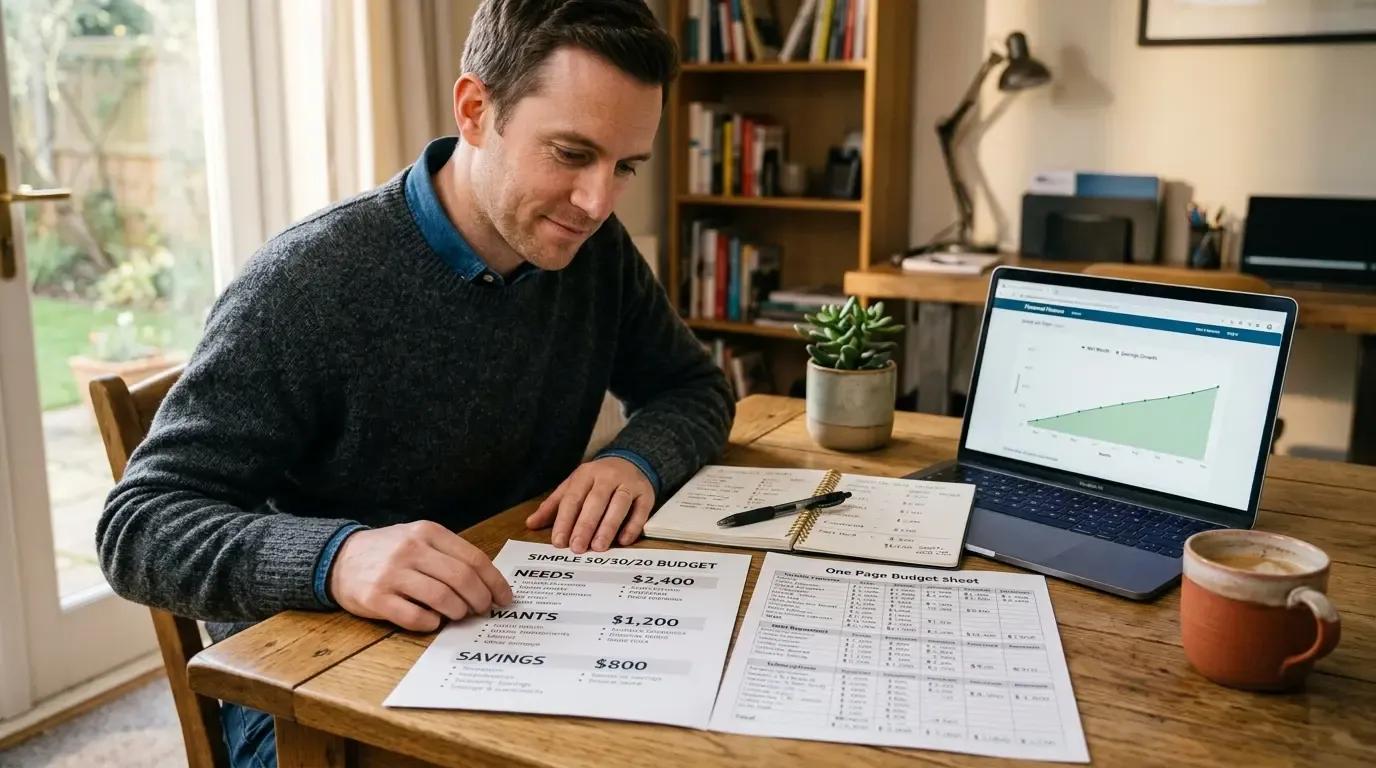
Case Study: I Switched from 50/30/20 to Zero-Based Budgeting – Here's What Changed in 6 Months
A six-month documented case study comparing the 50/30/20 rule and zero-based budgeting – with real numbers, behavioral shifts, and an honest verdict on which method delivers more control.

When the 50/30/20 Rule Breaks Down: A Guide for Irregular Income, Gig Workers & the Self-Employed
The 50/30/20 rule was built for predictable paychecks. If your income fluctuates – freelance, rideshare, delivery, consulting – the percentages collapse the moment income dips. This guide breaks down why the rule fails gig workers and the self-employed, and lays out the budgeting systems that actually hold up: zero-based budgeting, Pay-Yourself-a-Salary, Profit First, and envelope allocation.

Zero-Based Budgeting: Step-by-Step Guide for Excel and YNAB
Zero-based budgeting assigns every dollar a specific job before the month starts – income minus expenses equals exactly zero. This step-by-step guide covers how to build a working ZBB in Excel and YNAB, including formulas, category structures, and how to handle irregular income.