

Age & Residency
Must be at least 18 years old and a legal U.S. resident or citizen with a valid government-issued ID.

Texas borrowers can find flexible personal loan terms and competitive APRs. Lenders often evaluate the complete financial profile, not just a credit score.
A personal loan is an unsecured installment loan, meaning no collateral is required. It provides a lump sum that you repay over a fixed term (typically 24 to 84 months) with a predictable, fixed interest rate. Lenders determine your APR based on credit score, income, and debt-to-income ratio (DTI). Borrowers with strong credit access the best rates, while options exist for those with lower scores.
Many Texas-based lenders process applications within one business day, ensuring funds are available quickly when timing is a critical factor for your financial needs.
Lenders in Texas often consider income, employment stability, and debt-to-income ratio in addition to a credit score, creating a realistic path to funding for more applicants.
All partner lenders are licensed under the Texas Finance Code, provide full disclosure of APR and fees upfront, and adhere to OCCC-enforced borrower protection regulations.
The request may take a few minutes. Here's what most Texas lenders require before they can review your information and decide whether to offer credit.
Must be at least 18 years old and a legal U.S. resident or citizen with a valid government-issued ID.
Proof of steady income (e.g., W-2s, self-employment records, or benefits) is needed to assess your repayment ability and DTI ratio.
A valid U.S. checking or savings account is necessary for receiving funds and making scheduled monthly payments.
Legal lending restrictions for TX residents.
Max Loan Amount
Lender-specific, typically $1,000-$100,000 based on borrower's profile.
Max Term
Terms from 12 to 84 months are common.
APR/Fees
Rates are lender-determined; all fees must be disclosed per OCCC rules.
Rollovers
Texas law permits refinancing, but terms are subject to lender policies and Texas Finance Code regulations.
Information provided is for educational purposes only. Borrowers are encouraged to review all loan terms carefully before signing. Interest rates and fees vary by lender and loan type.
Compared to its neighbors, Texas offers moderate personal loan accessibility. While New Mexico and Oklahoma also have unregulated APRs, Louisiana imposes stricter caps. This lack of an APR ceiling in Texas presents both opportunities for competitive rates and risks of high-cost offers for some borrowers. Using a comparison service that performs only a soft credit inquiry allows you to review offers from multiple OCCC-licensed lenders without impacting your credit score.
Borrower protections in Texas are mandated by the Texas Finance Code and enforced by the Office of Consumer Credit Commissioner (OCCC). This agency licenses lenders, investigates consumer complaints, and requires transparent disclosure of all loan terms, fees, and APRs. If a lender engages in deceptive practices, borrowers can file a formal complaint at occc.texas.gov. Understanding the role of the OCCC is a key defense against predatory lending.
Jordan T.
“The application flow was clear and I knew exactly what to prepare before submitting. Funds reached my account the next business day.”
Monica R.
“I used the resources and calculators first, then compared options with much more confidence. The APR breakdown made the math obvious.”
Devon K.
“Their pre-qualification flow showed me three lenders with no origination fee — I would have missed that on my own.”
Priya S.
“Every offer showed APR and total repayment cost up front. No hidden fees in the fine print.”
Andre L.
“I expected to get rejected with my score, but two partner lenders responded with available terms.”
Because Texas lacks a statutory APR cap, comparing lenders is essential. Bromoney connects you with OCCC-licensed lenders who provide transparent disclosures on total cost, fees, and APR before you commit, allowing for a true side-by-side comparison.

Estimate exactly how much you'll owe before you commit. Enter your loan amount and repayment term to see total costs, including fees and interest, laid out clearly.
Calculate my loanBorrow against your home's equity for lower rates, but your property is at risk.
Instant access to cash from your credit line, but high fees and interest apply immediately.
Personal loan terms, APRs, and amounts vary by state. California, for instance, caps APRs on certain loans. Other states like Florida and Texas have distinct licensing rules that impact lender availability and terms. Before applying, review your state's regulations to understand the local lending landscape.






















What is a good interest rate on a personal loan in Texas?
Can I get a personal loan in Texas with bad credit?
How long does it take to get a personal loan in Texas?
Does Texas regulate personal loan lenders, and how do I verify a lender is legitimate?
How does an unsecured personal loan work through BroMoney?
What do I need to qualify and get approved for a personal loan?


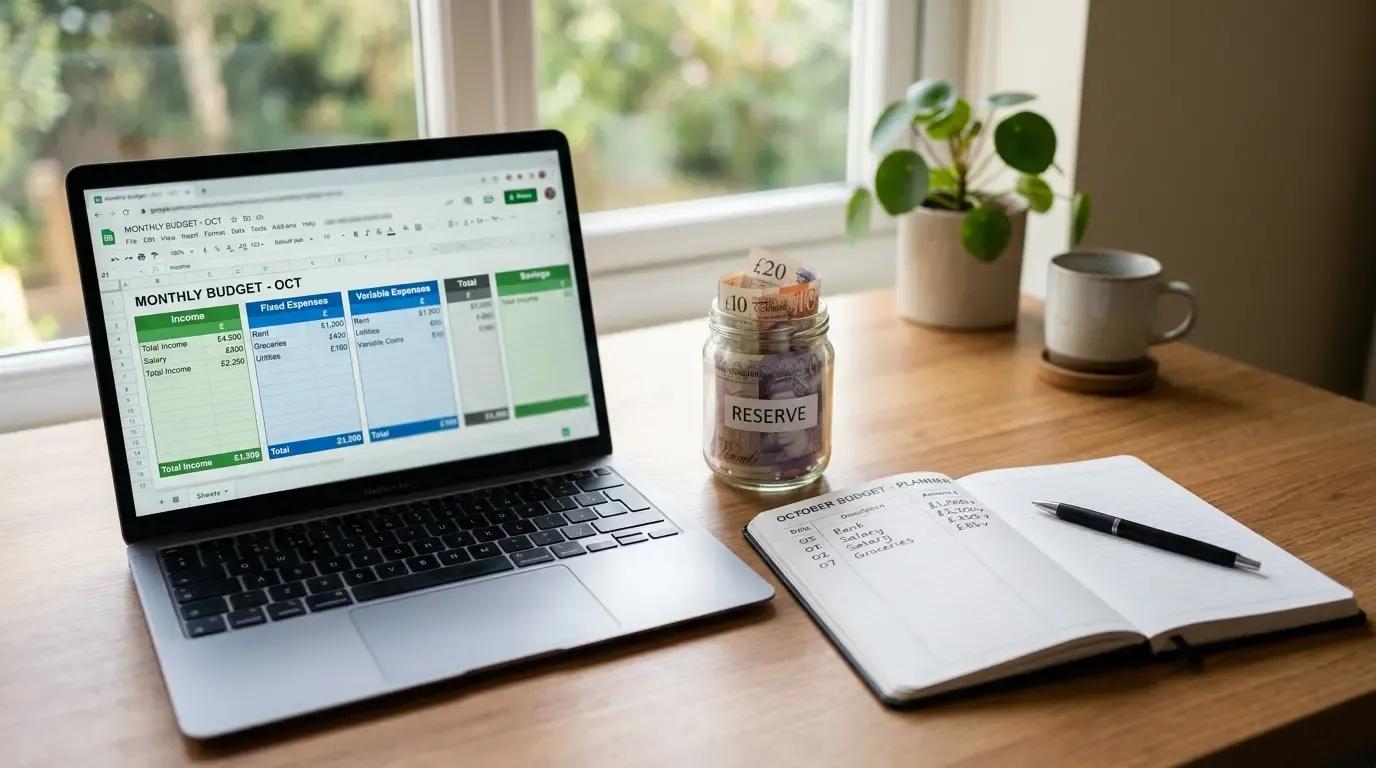
Freelancers, contractors, and seasonal workers need a budgeting system built for income swings – not stable paychecks. This guide shows how to combine 50/30/20 and zero-based budgeting into a hybrid approach anchored by a Minimum Base Income and a seasonal reserve fund.
We bridge the gap between your financial goals and premier lending services nationwide.
This page is informational and does not guarantee approval. Actual rates depend on your lender and Texas regulations.
Join millions of Americans who trust our platform to compare rates, find the best loans, and rebuild their credit — all in one place

Bank-level 256-bit encryption