


Prequalification vs. Preapproval vs. Application: Soft Pull vs Hard Pull

People shopping for a loan often treat prequalification, preapproval, and application as synonyms. That is where expensive mistakes start. In personal lending, those words describe different stages of the process, and lenders do not always use them the same way. Experian notes that the difference between prequalification and preapproval depends on the creditor and the loan type, and some creditors use the terms interchangeably. That confusion gets worse when credit is already shaky. Searches like "apply for personal loan with bad credit," "applying for a personal loan with bad credit," "online personal loan with bad credit," and even the stripped-down phrase "personal loan online bad credit" all point to the same fear: one wrong click could trigger a hard inquiry, a denial, or both. The safest way to shop is to understand what each stage actually does before entering sensitive information.
Why these stages matter more than most borrowers think
Prequalification is usually the shopping stage. Preapproval is usually a stronger signal, but still not a promise. The application is the formal request for credit, and that is where full underwriting begins. Discover states that checking a rate can happen with no impact to the credit score, but moving forward with a new personal loan application requires consent to a hard credit inquiry. There is also a legal layer that most borrowers never hear about. Under CFPB rules, an inquiry or prequalification request can become an application if the creditor evaluates the consumer's information, decides to decline the request, and communicates that decision. Once that happens, the creditor has to follow adverse action notice rules.
That one detail explains why these terms are not just marketing language. They affect credit pulls, documentation, timing, and what rights the borrower has if the lender says no.
What prequalification usually means
In personal loans, prequalification is usually a light screening. The lender looks at basic facts such as income, housing payment, debt, and sometimes a limited look at credit to estimate whether the borrower is likely to qualify. Experian describes prequalification as a basic review of creditworthiness, often based on limited information, and says that if a credit report is reviewed at this stage, it typically results in a soft inquiry that does not affect credit scores.
TransUnion gives the same practical advice for personal loans. It says that applying for a personal loan can lead to a hard inquiry, so borrowers who are rate shopping should consider prequalification first. If the lender offers prequalification, the borrower can compare rate quotes through a soft inquiry without affecting the credit score.
That makes prequalification useful for one job: narrowing the field. It helps answer basic questions fast. Is the lender open to this credit profile? What loan amount range is realistic? Is the quoted APR even worth a closer look? It is not the same as approval, and it is not the point to celebrate. It is a screening tool.
Expert tip: When I review loan funnels, I look for one sentence before anyone enters a Social Security number: "Check your rate with no impact to your credit score." If that line is missing, I assume the next click may trigger a hard pull and verify before moving forward.
What preapproval means, and why it is still not a yes
Preapproval usually sits between prequalification and a full application. Experian describes it as a more rigorous step that can require a deeper review of income, bank statements, tax returns, and credit. It also says preapproval is often a better indication of likely approval than prequalification, but it still does not guarantee final approval.
This is where many borrowers get misled by the word itself. "Preapproved" sounds final. It is not. Even CFPB guidance on prequalification and preapproval letters says both letters indicate a lender is willing to lend up to a certain amount based on assumptions, but neither is a guaranteed loan offer.
The credit-pull question also gets trickier here. Experian says preapproval typically results in a hard inquiry, while TransUnion says whether prequalification uses a hard or soft inquiry depends on the lender, and preapproval typically requires a hard pull. That is why the label matters less than the lender's actual disclosure. The borrower should ask one direct question before proceeding: "Will this step create a hard inquiry?"
What changes when the process becomes an application
The application is the formal credit request. At this point, the lender is no longer offering a rough estimate. It is underwriting a real file. Discover says that once a borrower completes a personal loan application online, the lender may verify income and employment information, direct deposit details, and creditor balances for debt consolidation. Discover also states that after a rate check, moving forward with a new application requires consent to a hard credit inquiry. This is also the stage where documentation starts to matter. Discover's checklist for personal loan applications includes proof of identity, proof of income, proof of address, employer information, and bank account details. TransUnion similarly points to Social Security number, income and employment information, tax forms, bank statements, loan purpose, amount, and desired term.
That shift from estimate to verification is the practical difference between browsing and applying. At prequalification, the lender is testing fit. At the application, the lender is testing the proof. If the information is incomplete but still sufficient for a credit decision, CFPB rules say the creditor can evaluate the file and, if it denies the request, must give specific reasons rather than using "incomplete application" as a vague explanation.
Soft pull vs. hard pull in plain language
A soft pull happens when credit is checked for reasons not tied to a formal credit application. Experian says soft inquiries include checking one's own credit, loan prequalification, some preapproval situations, promotional offers, and account reviews. Soft inquiries do not affect credit scores.
A hard pull happens when a lender accesses the credit file as part of a credit application. Experian says hard inquiries can occur when applying for a personal loan, credit card, mortgage, student loan, or other new credit, and they can temporarily lower credit scores.
Borrowers also need to know one subtle point about shopping behavior. FICO's rate-shopping protection is designed for mortgage, auto, and student loan inquiries. It is not framed as a blanket rule for unsecured personal loans. That means a borrower should not assume multiple personal loan applications will all be bundled into one scoring event. Prequalification is the safer comparison tool.
What this means for bad-credit borrowers shopping online
This is where discipline matters. A borrower trying to apply for a personal loan with bad credit should spend more time in prequalification and less time in full applications. Bad-credit borrowers are more likely to get mixed offers, higher APRs, and aggressive marketing. The CFPB explains that APR reflects not just the interest rate but also additional fees charged with the loan, including origination charges. In other words, a loan that looks cheap at the headline rate can still be expensive in total cost.
That risk rises when the borrower is shopping online under pressure. The FTC warns that advance-fee loan scams target people with bad credit or trouble getting approved. These scams often advertise online, promise approval regardless of credit history, and demand money up front for "processing," "insurance," or an "application" fee. The FTC says legitimate lenders do not promise a loan without reviewing credit history and do not guarantee approval because a fee was paid first.
So, for an online personal loan with bad credit, the clean process is simple: pull the official credit reports first, use prequalification to compare likely offers, confirm whether the next step is a soft or hard pull, then submit one full application only after the lender, APR, fees, and repayment terms all make sense. AnnualCreditReport.com says it is the official site for free annual credit reports and that free weekly online reports are available from Equifax, Experian, and TransUnion.
Expert tip: Bad-credit borrowers do not need more applications. They need fewer surprises. One clean application beats five rushed ones.
The easiest way to remember the sequence
Use this order:
- Prequalification - quick fit check, often a soft pull, useful for comparing offers
- Preapproval - stronger signal, often more documentation, may involve a hard pull
- Application - formal request, full underwriting, hard pull is common, approval or denial follows
That sequence protects both time and credit profile. It also keeps the borrower from mistaking a marketing label for a lending decision.
What happens if the lender says "No."
A denial should not be treated as a dead end. It is data. The CFPB says that if a lender rejects a credit application based on a credit report, the lender must provide an adverse action notice with the credit score used, the key factors affecting that score, the name of the credit reporting company, and the right to get a free copy of the report from that company within 60 days. It must also explain how to fix mistakes or add missing information. That makes the application stage valuable even when the answer is no. A good denial tells the borrower what broke the file. Too much debt. Thin file. Delinquencies. Unverified income. Once that is clear, the next move becomes strategic instead of random.
Frequently Asked Questions
Does prequalification always use a soft pull?
No. It often does, but not always. Prequalification typically involves a soft inquiry, while TransUnion says whether prequalification requires a hard or soft inquiry depends on the lender.
Is preapproval the same as approval?
No. Preapproval is a stronger signal than prequalification, but it is still not a guaranteed loan offer. Final approval can still change after full review of credit, income, and application details.
When does a hard pull usually happen on a personal loan?
It usually happens when the borrower submits a formal application. Discover states that checking a rate does not affect the score, but moving forward with a new personal loan application requires consent to a hard credit inquiry. Applying for a personal loan is a common hard-pull event.
What should someone do before applying for a personal loan with bad credit?
Start with the official credit reports, dispute errors, use prequalification to compare offers, and watch the APR instead of the headline rate alone. Avoid any lender that promises guaranteed approval or asks for an upfront fee tied to approval.

Denis Goncharenko
Denis is a seasoned financial journalist and content strategist with over 15 years of experience driving editorial excellence in high-stakes digital media. Specializing at the intersection of traditional finance and emerging technologies, he has spent the last 8+ years as the Managing Editor for Cryptonews.net, overseeing market analysis, regulatory breakdowns, and institutional tech trends. Recognized by global Web3 and fintech leaders for his rigorous fact-checking and editorial standards, Denis excels at translating complex financial data, decentralized finance (DeFi) frameworks, and digital asset market dynamics into high-trust, authoritative content. His deep expertise in tech-driven financial ecosystems makes him a key voice in navigating YMYL (Your Money or Your Life) content strategy and maintaining strict editorial integrity. Core Competencies: FinTech Journalism, Digital Asset Markets, DeFi & Web3 Analytics, Financial Technology Trends, FinTech Regulation & Compliance. Editorial & E-E-A-T Strategy: YMYL Content Strategy, Financial Fact-Checking, Editorial Management, Data-Driven Content Architecture, Risk-Mitigated Copywriting.
To authorWas this article helpful?
Same blogs

How to Apply the 50/30/20 Rule for a Family of 4 on $75,000–$80,000/Year: Step-by-Step Breakdown
Earning $75,000–$80,000 with four people in the household? Here's the real math behind the 50/30/20 rule – including what needs actually cost in 2025–2026, how childcare blows up the budget, and how to adapt the framework when the numbers don't fit neatly.
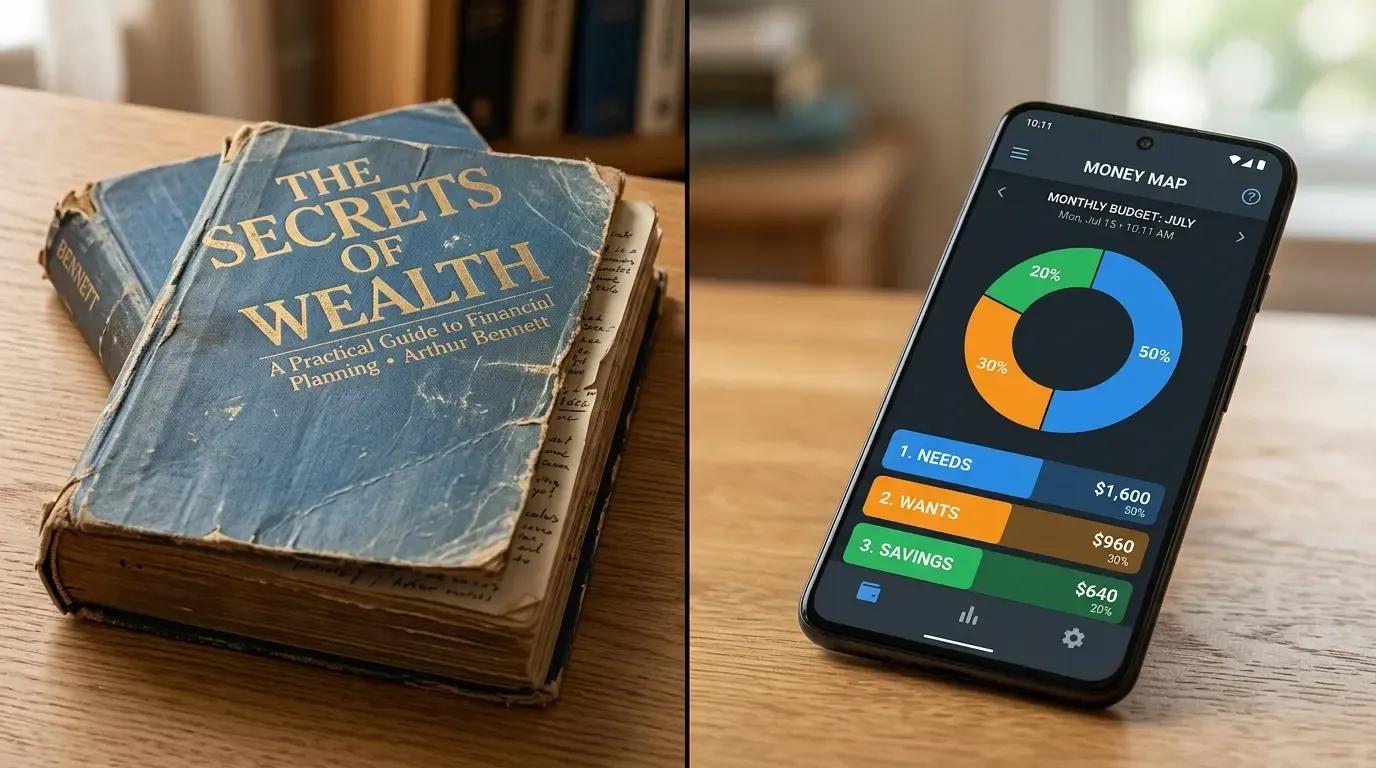
The History of the 50/30/20 Rule: Where It Came From and Why It Stuck
The 50/30/20 rule has a precise origin: a 2005 book, two co-authors, and decades of bankruptcy research compressed into three numbers. Here's where it came from, what the data behind it actually says, and why the percentages are under pressure in 2026.