


Documents and Verification Checklist for a Personal Loan: ID, Income Proof, and Bank Statements

A personal loan application rarely fails because of one dramatic issue. Most applications slow down on small gaps. A name on the bank statement does not match the ID. Income entered on the form does not match deposits. The address on the application differs from the lease. A lender pauses the file, asks for more proof, and the borrower loses time.
That pattern matters even more for borrowers dealing with bruised credit. Someone searching personal loan application with bad credit often expects the credit score to be the whole story. It is not. Credit matters, but document quality shapes the next decision just as much. Lenders still need to confirm identity, income, residence, and the ability to repay before funding an unsecured loan. Major consumer finance and lender resources consistently point to the same core packet: government ID, proof of income, address verification, employment details, and recent bank statements.
The fastest applications start before the form opens. A borrower who gathers records first usually moves through verification with fewer follow-up requests. That matters because many online lenders ask for documents after prequalification, not just at the end. A file that arrives complete gives underwriting fewer reasons to stop, recheck, or ask for a second upload. Applicants may need to submit pay stubs or bank statements, and employers may be contacted for more information, with identity, income, and address documents at the center.
What lenders are verifying
A lender is trying to answer four questions. First, does the applicant exist and match the identity on the form? Second, does the stated income show up in reliable records? Third, does the applicant live where the application says they live? Fourth, do the documents support a realistic ability to repay the loan? That is why lenders ask for overlapping proof. A pay stub shows earnings. A bank statement shows deposits. A lease or utility bill ties the applicant to an address. A government-issued photo ID anchors the entire file.
The overlap becomes more important when credit is weak. An online personal loan application bad credit file often faces closer review because the lender already sees elevated risk in the credit profile. Clear documents do not erase bad credit, but they remove other doubts. That shifts the discussion from "Is this file consistent?" to "Do the loan terms fit the borrower's actual cash flow?" Some lenders also look at alternative data, including proof of income reflected in bank activity, for borrowers with thin or weaker credit files.
Expert tip: "The common mistake is treating document upload as admin work. It is underwriting evidence. A blurry statement, a cropped ID, or a missing page signals risk before a human ever reviews the file."
The core document packet
The packet usually contains five groups of records:
- Government-issued photo ID, such as a driver's license, passport, or state ID
- Proof of income, such as pay stubs, W-2s, 1099s, tax returns, benefit letters, or profit and loss records for self-employed applicants
- Recent bank statements that show deposits, balances, and account ownership
- Proof of address, such as a utility bill, lease agreement, mortgage statement, insurance statement, or a bank or credit card statement with the current address
- Basic employment information, including employer name and contact details, when the lender wants to verify work status directly
That list looks simple, yet each item carries traps.
ID verification – the first filter
Identity documents fail for predictable reasons. The image is cut off. The expiration date has passed. The address is old. The legal name does not match the application. Even a middle initial mismatch can trigger a review when the lender's system is comparing records across the application, bank account, and credit bureau file.
Some lenders ask for one ID. Others ask for more than one form of identification or for additional proof of address if the ID shows an old residence. Driver's licenses, passports, Social Security cards, citizenship documents, and state-issued IDs are among the documents lenders often accept – it may request a government-issued photo ID plus documents that confirm the current address.
A strict rule helps here: the application should mirror the ID exactly. Use the full legal name, current address, and date of birth that appear in formal records. If a recent move or name change sits in the background, upload the supporting document early. CFPB's loan application guidance for consumer lending also flags documentation of recent name changes as part of a clean loan packet.
Proof of income – where many files stall
Income proof does more than confirm employment. It tells the lender how stable the cash flow is, how recent it is, and whether the income type matches the story in the application. A salaried employee and a self-employed contractor can earn the same annual amount and still present two different risk pictures if one income stream lands twice a month and the other lands irregularly.
For traditional employment, lenders often ask for pay stubs, W-2s, or tax returns. For self-employed applicants, lenders often look for tax returns, 1099s, business bank statements, or a profit and loss statement. For benefit income, the proof shifts to award letters or official statements tied to Social Security, pension, annuity, disability, child support, or alimony.
This is the place where bad-credit borrowers often create avoidable friction. They round the income up on the form. They include overtime that does not show up consistently. They count transfers from savings as income. They submit one pay stub even though the lender needs a fuller pattern. When underwriting compares stated income with bank deposits, payroll records, and tax documents, the mismatch becomes the real problem.
Expert tip: "State income the same way the documents show it. If the pay stub says one thing and the form says another, the lender reads the higher number as a credibility issue, not a math error."
Why bank statements matter so much
Borrowers often dislike sending bank statements because the request feels intrusive. From the lender's side, bank statements serve a clear purpose. They show whether the applicant controls the account, whether pay actually arrives there, whether the balance history supports the stated financial picture, and whether the account data aligns with the application.
CFPB's loan packet guidance for consumer lending includes recent bank statements among the records to gather. Lender and personal loan guidance from Bankrate, LendingClub, and Rocket Loans also identifies bank statements as a routine part of income and account verification.
A bank statement does not need to look rich. It needs to look coherent. Regular payroll deposits, a stable account holder name, and a current address help the file. Missing pages, heavy redactions, or unexplained large deposits do the opposite. Applicants who move money between accounts should label the true income account clearly and use the same account for loan disbursement when the lender asks for it. That reduces confusion during review.
Proof of address – small detail, large effect
Address verification feels secondary until it breaks the file. Lenders use address data to match identity records, fraud signals, and credit bureau information. A borrower who recently moved, uses a mailing address, or has different addresses across statements often gets pulled into manual review.
Accepted proof of address often includes a utility bill, lease agreement, mortgage statement, insurance statement, voter registration card, or a bank statement with the current address. LendingClub states that recent utility bills and similar records may be used to verify the current address. Bankrate lists the same family of documents.
The fix is simple. Pick one current address and align every document around it before applying. If a recent move still appears in the record set, upload the lease or other transition document instead of waiting for the lender to ask.
What happens after submission
A clean file does not guarantee approval. It gives the lender enough verified information to make a faster and fairer credit decision. If the application is denied because of information in the credit report, federal rules require the lender to send an adverse action notice with specific reasons or a notice explaining how to obtain those reasons. CFPB also states that if the lender used a credit report in the denial, the borrower must receive credit score information and can obtain a free credit report tied to that adverse action. AnnualCreditReport.com also states that free online credit reports are available from Equifax, Experian, and TransUnion.
That matters for borrowers trying to apply for a personal loan online with bad credit. A denial is not just a rejection. It is a diagnostic event. The notice shows what blocked the file. The credit report shows whether the negative item is accurate. FTC guidance explains that consumers can dispute errors on credit reports and should send copies, not originals, of supporting documents.
The practical way to prepare before applying
The strongest applications treat verification like a packet, not a scavenger hunt. Put the ID, proof of address, recent pay records, last tax return, and last two bank statements in one folder. Check that the name and address match across all files. Confirm that every PDF includes all pages. Review the credit reports before the application goes live. That sequence shortens back-and-forth and gives the lender fewer excuses to delay the file. CFPB and lender guidance both support this preparation-first approach.
The larger lesson is simple. Credit score gets attention. Document consistency gets decisions moving. A borrower with imperfect credit and clean verification often looks safer than a borrower with a better score and a messy file.
Frequently asked questions
Do all personal loan lenders ask for the same documents?
No. The core packet stays similar across lenders, but the exact document list varies by lender and by borrower profile. Identity, income, address, and bank account verification show up repeatedly across major lenders and finance resources.
Do bank statements replace pay stubs?
Sometimes, but not always. Some lenders accept bank statements as part of income verification, while others still want pay stubs, tax returns, or employer confirmation. The answer depends on income type and underwriting rules.
What if the application is denied because of bad credit?
The lender must provide an adverse action notice or explain how to get the reasons. If the denial is based on a credit report, the borrower also gets information that supports a free report request connected to that decision.
Should a borrower check credit reports before applying?
Yes. Free online credit reports are available through AnnualCreditReport.com, and reviewing them before applying helps catch errors that drag a file into denial or worse loan terms.

Denis Goncharenko
Denis is a seasoned financial journalist and content strategist with over 15 years of experience driving editorial excellence in high-stakes digital media. Specializing at the intersection of traditional finance and emerging technologies, he has spent the last 8+ years as the Managing Editor for Cryptonews.net, overseeing market analysis, regulatory breakdowns, and institutional tech trends. Recognized by global Web3 and fintech leaders for his rigorous fact-checking and editorial standards, Denis excels at translating complex financial data, decentralized finance (DeFi) frameworks, and digital asset market dynamics into high-trust, authoritative content. His deep expertise in tech-driven financial ecosystems makes him a key voice in navigating YMYL (Your Money or Your Life) content strategy and maintaining strict editorial integrity. Core Competencies: FinTech Journalism, Digital Asset Markets, DeFi & Web3 Analytics, Financial Technology Trends, FinTech Regulation & Compliance. Editorial & E-E-A-T Strategy: YMYL Content Strategy, Financial Fact-Checking, Editorial Management, Data-Driven Content Architecture, Risk-Mitigated Copywriting.
To authorWas this article helpful?
Same blogs

Installment Loans for Bad Credit: How They Work, Pros, Cons, and Smart Comparisons
Learn how installment loans for bad credit work, their advantages and risks, and how to compare offers safely.
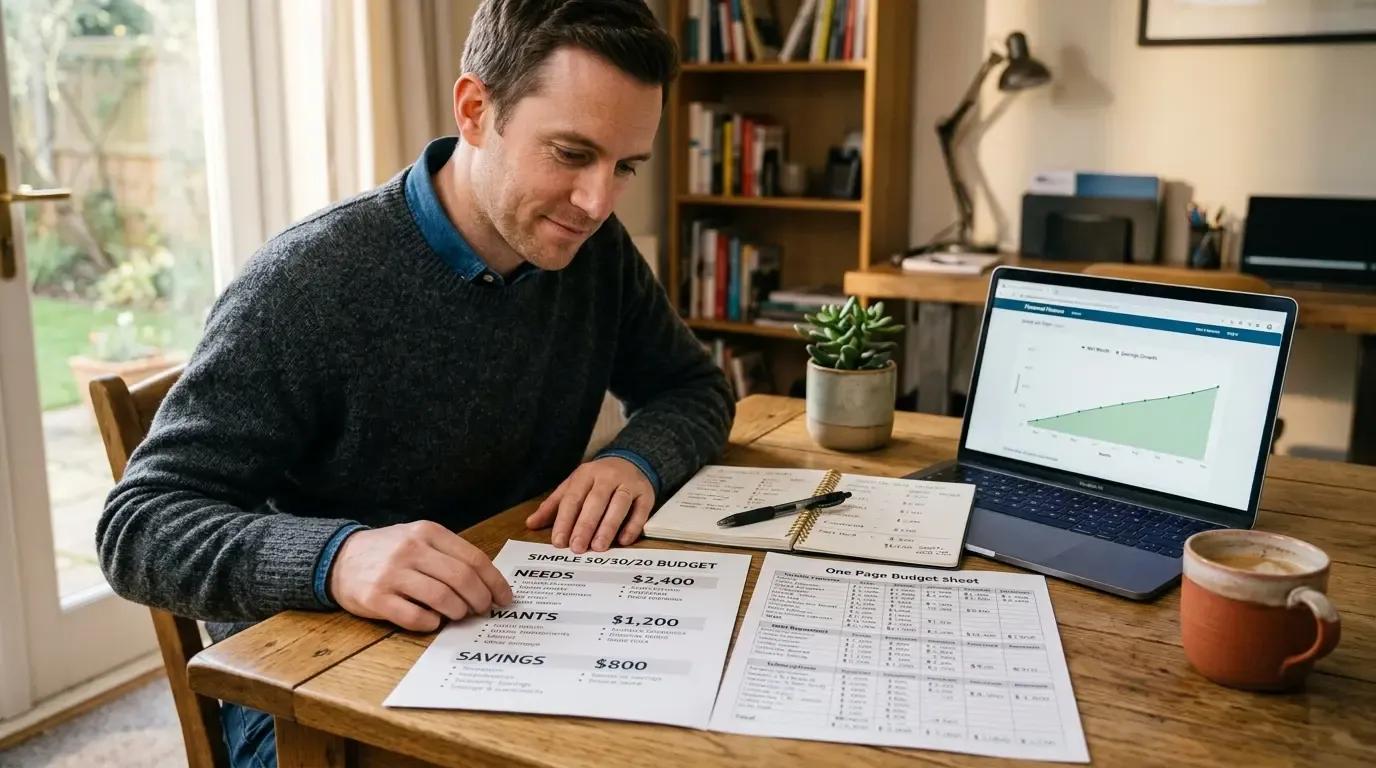
Case Study: I Switched from 50/30/20 to Zero-Based Budgeting – Here's What Changed in 6 Months
A six-month documented case study comparing the 50/30/20 rule and zero-based budgeting – with real numbers, behavioral shifts, and an honest verdict on which method delivers more control.

When the 50/30/20 Rule Breaks Down: A Guide for Irregular Income, Gig Workers & the Self-Employed
The 50/30/20 rule was built for predictable paychecks. If your income fluctuates – freelance, rideshare, delivery, consulting – the percentages collapse the moment income dips. This guide breaks down why the rule fails gig workers and the self-employed, and lays out the budgeting systems that actually hold up: zero-based budgeting, Pay-Yourself-a-Salary, Profit First, and envelope allocation.