

One-Time vs. Recurring Expenses: Why Separate Categorization Is Critical for Your Budget
What Are Budget Categories and Why Do They Matter?
Budget categories are labels that group similar spending into trackable buckets – housing, food, transportation, debt payments, savings. Without them, a bank statement is just a list of numbers. With them, it becomes a decision-making tool.
The practical impact is measurable. Households that apply consistent expense categorization save, on average, 20% more than those that don't, according to a 2025 World Bank analysis. Yet the OECD's 2025 Global Financial Literacy Survey found that only 55% of adults possess basic financial knowledge – meaning nearly half the population navigates budgets without the vocabulary to do it well.
Categorization matters because it converts raw spending data into financial categorization best practices – a structured view of where money actually goes versus where you think it goes. That gap between perception and reality is where most budgets fail.
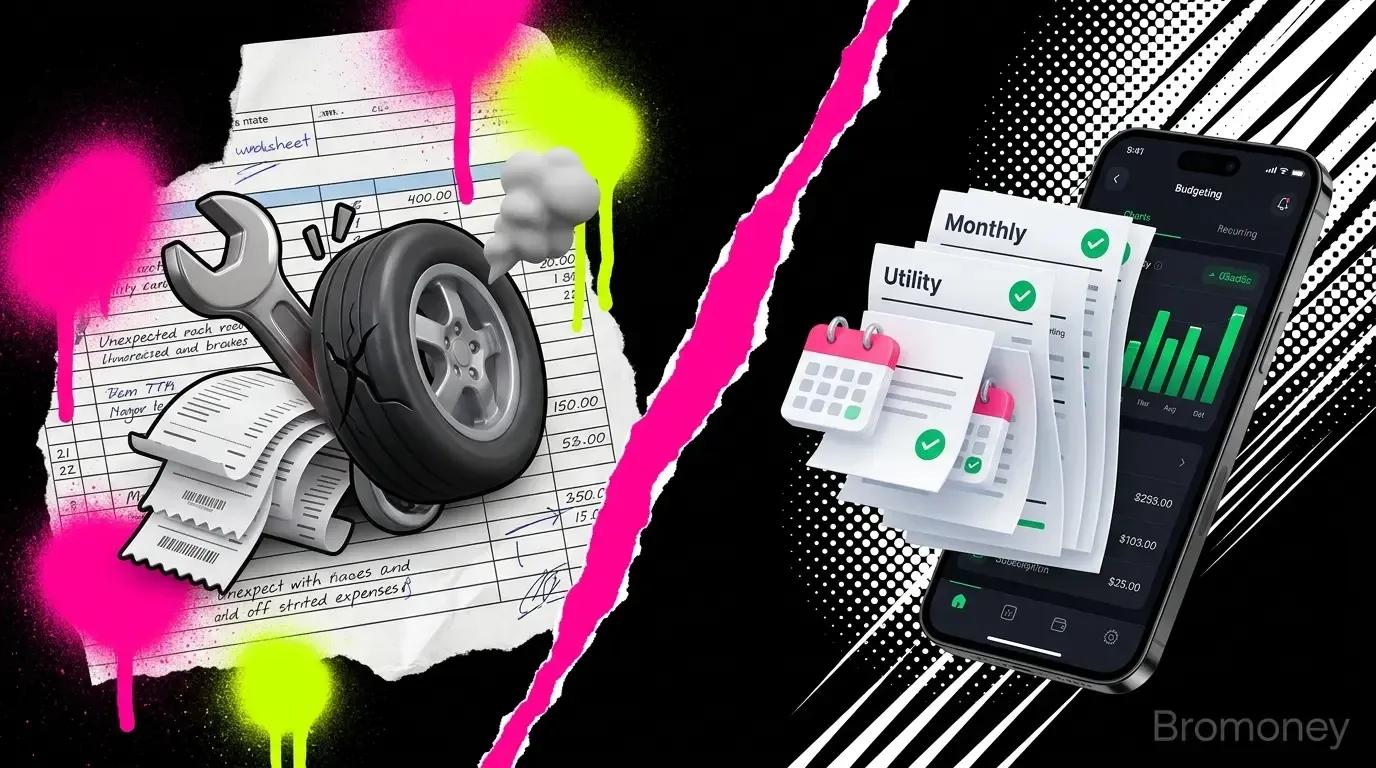
The two most consequential categories to separate correctly are recurring expenses (predictable, repeating costs) and one-time expenses (irregular, non-repeating costs). Mixing them is the single most common structural error in personal budgeting, and it distorts every downstream decision: how much you need to earn, how much you can save, and whether you're actually ahead or quietly falling behind. Personal budgeting starts here – not with apps or spreadsheets, but with this distinction.
Core Expense Categories Every Personal Budget Needs
Before separating one-time from recurring costs, you need a working taxonomy of what goes into a budget. Here are the standard categories, with recommended percentage ranges based on CFP guidance and the 50/30/20 framework applied to net income.
Housing
Rent or mortgage payment, property taxes, renter's or homeowner's insurance, HOA fees, and basic utilities. This category typically consumes 25–35% of net income. It's almost entirely recurring – and mostly fixed. The mortgage doesn't negotiate when the month is tight.
Transportation
Car payment, auto insurance, fuel, parking, public transit passes, and routine maintenance. Budget 10–15% of net income. The fixed piece – car payment, insurance – is straightforward. The variable piece – fuel, repairs – is where categorization errors begin, and where most people first encounter the difference between a recurring expense and a one-time cost.
Food
Groceries and dining out. These are variable recurring expenses – they happen every month, but the amount shifts. Budget 10–15% of net income. Separating grocery spend from restaurant spend within this category reveals where the money actually flows.
Entertainment and Personal Spending
Streaming services, gym memberships, hobbies, clothing, and leisure activities. This is the category where one-off fun money purchases blur with recurring subscriptions. Budget roughly 5–10%, and audit it quarterly – subscription creep lives here.
Healthcare
Health insurance premiums (if not employer-covered), copays, prescriptions, dental, and vision. This category is deceptively expensive in the U.S. – a single unexpected procedure costs $3,000–$20,000 without adequate coverage. Budget 5–10% for budgeting medical expenses, and maintain a separate sinking fund for out-of-pocket costs. The premium is a recurring fixed expense; the copay is variable; the emergency surgery is a one-time cost. All three behave differently and need different planning vehicles.
Debt Payments
Student loans, credit card minimums, personal loans, and any other installment obligations. These are fixed recurring expenses that must be funded before discretionary spending. If debt payments consume more than 20% of net income, the budget needs structural intervention – not just tighter spending on groceries.
Savings
Emergency fund contributions, retirement accounts (401(k), IRA), and targeted savings for specific goals. The benchmark is at least 20% of net income, though households carrying high-interest debt often need to split this bucket between debt payoff and liquid reserves. Savings isn't what's left over – it's a budget line that gets funded first.
What Are One-Time (Non-Recurring) Expenses?
Definition and Core Characteristics
A one-time expense is a significant cost that occurs once and is not expected to repeat in the foreseeable future. A non-recurring expense is a broader term covering infrequent costs that may happen more than once but follow no predictable schedule.
Two defining characteristics:
- No fixed schedule. Unlike rent, which hits the same date every month, a one-time expense has no calendar anchor.
- Low predictability. The timing and amount cannot be reliably forecasted within a standard monthly budget cycle.
The key distinction: every one-time expense is non-recurring, but not every non-recurring expense is strictly one-time. A car repair that happens every few years is non-recurring – it will happen again. A down payment on a home is truly one-time. That difference determines which financial vehicle you use to plan for it.
Common Examples of One-Time Expenses
Based on U.S. cost data for 2024–2026:
- Major car repair (engine, transmission): $1,500–$5,000
- Medical procedure (surgery, dental, vision – without full insurance coverage): $3,000–$20,000+
- Large appliance purchase (refrigerator, washer/dryer set): $1,500–$4,000
- Wedding: average $35,000 in the U.S.
- Interstate move: $5,000–$10,000
- Home renovation (single room): $8,000+
- Extended family vacation: $4,000–$10,000
These aren't hypothetical figures. The Center for Retirement Research at Boston College found that unexpected expenses equal roughly 10% of annual income for a typical household in an average year – meaning a family earning $80,000 should expect $8,000 in irregular costs annually, even in a stable year.
How One-Time Expenses Differ From Irregular Expenses
This distinction trips up even experienced budgeters.
| One-Time Expense | Irregular Expense | |
|---|---|---|
| Will it happen again? | No (or very rarely) | Yes, periodically |
| Example | Home down payment, wedding | Annual car insurance premium, holiday gifts |
| Budget treatment | Emergency fund or targeted savings | Sinking fund with monthly contributions |
Irregular expenses – annual insurance renewals, car maintenance, seasonal clothing, holiday gifts – are predictable in category, even if not in exact timing. They belong in sinking funds. True one-time expenses belong in the emergency fund or a dedicated savings reserve.
As SoFi's 2026 budgeting guide explains: "A sinking fund is a dedicated account where you set aside money each month for planned or anticipated non-recurring expenses, such as holiday gifts, a vacation, or a car or home repair."
What Are Recurring Expenses?
Definition and Core Characteristics
Recurring expenses are costs that occur on a predictable schedule – monthly, quarterly, or annually – with a known or estimable amount. Ramp's 2026 financial guide defines them precisely: "Recurring expenses are costs that happen on a predictable schedule – such as rent, utilities, insurance premiums, debt payments and subscriptions."
Two defining characteristics:
- Periodicity. The expense repeats on a calendar cycle.
- Predictability. The amount is either fixed or estimable from prior months.
Recurring expenses form the baseline of your budget – the minimum cash outflow required to maintain your current lifestyle. Every other financial decision is made on top of this foundation. Get this number wrong and every downstream calculation is off.
Common Examples of Recurring Expenses (Monthly and Annual)
Monthly recurring:
- Rent or mortgage payment
- Utility bills (electricity, water, gas, internet)
- Health insurance premiums
- Car payment and auto insurance
- Minimum debt payments (student loans, credit cards)
- Streaming and software subscriptions
Annual recurring:
- Homeowner's or renter's insurance renewal
- Vehicle registration
- Annual software licenses or membership fees
- Property taxes (if not escrowed)
Annual payments are still recurring – the interval is 12 months, not 1, but the obligation repeats on schedule. This is a common misclassification: people treat annual bills as "one-time" because they feel infrequent. They aren't. Missing them in a monthly budget review is one of the most reliable ways to create a cash flow crisis in the month they land.
The subscription economy has amplified this problem. As of early 2026, the average U.S. household carries approximately 17 active paid subscriptions, up from 12 in 2024 – a 42% increase in recurring payment volume in two years. Most households can't name all 17 without checking their bank statements. Automated alerts for subscription renewals are one practical way to stay ahead of this creep before it compounds.
Fixed Recurring vs. Variable Recurring: A Sub-Distinction
Not all recurring expenses behave the same way.
Fixed recurring expenses have a stable, predictable amount each cycle. Rent, mortgage, car payment, insurance premiums, and loan minimums fall here. Planning is straightforward: sum them up and treat the total as a non-negotiable floor.
Variable recurring expenses repeat on schedule but fluctuate in amount. Electricity bills, grocery spending, fuel costs, and dining expenses are the classic examples. For these, calculate the average over the prior 3–6 months and set that as your monthly target. Unlike fixed costs, variable recurring expenses respond directly to behavioral changes – which makes them the primary lever for budget optimization. For households evaluating software for fixed costs tracking, this sub-distinction matters: tools optimized for fixed recurring costs don't always handle irregular variable expenses well.
One-Time vs. Recurring Expenses: Side-by-Side Comparison
Comparison Table
| Parameter | One-Time Expenses | Recurring Expenses |
|---|---|---|
| Frequency | Once or irregularly – often without a predictable trigger | Regularly and cyclically (monthly, quarterly, or annually) |
| Predictability | Low. Timing and amount are difficult to forecast in a standard budget cycle | High. Amount and due date are known in advance, simplifying planning |
| Cash Flow Impact | Sharp and significant – can create an immediate shortfall requiring savings or credit | Steady and foreseeable – forms the baseline of monthly cash outflows |
| Planning Method | Emergency fund for unexpected costs; sinking funds for anticipated large purchases | Included in the monthly budget (e.g., 50/30/20 rule); automated payments recommended |
| Examples | Car purchase, home down payment, emergency repair, major medical procedure | Rent/mortgage, utility bills, subscriptions (Netflix, Spotify), insurance, loan payments |
| Tracking Tools | Spreadsheets (Excel, Google Sheets), YNAB sinking fund categories for large planned transactions | Bank apps with auto-categorization, PFM platforms, automated budget templates |
Why Separate Categorization Is Critical – 5 Key Reasons
1. Accurate Cash Flow Forecasting
When recurring expenses are isolated, they define your minimum monthly cash requirement – the floor below which income cannot fall without creating a deficit. One-time expenses sit above that floor as discrete events.
Mix the two, and the floor becomes invisible. A month with a $2,000 car repair looks like a $2,000 lifestyle increase. The following month looks artificially lean by comparison. Neither reading is accurate, and decisions made from distorted data are systematically wrong.
The Financial Planning Association's 2024 data shows that households with clean recurring/one-time separation achieve 40% greater accuracy in monthly cash flow forecasting than those without it. That accuracy compounds: better forecasts mean fewer emergency credit draws, lower interest costs, and faster progress toward savings goals.
2. Preventing Budget Shortfalls From Unexpected One-Time Costs
According to Bankrate's 2026 Annual Emergency Savings Report, only 47% of Americans can cover a $1,000 emergency expense from savings alone. Nearly 1 in 4 – 24% – have no emergency savings at all.
The structural cause is almost always the same: people don't maintain a dedicated reserve for one-time costs because they haven't separated those costs from regular spending. When the car breaks down, the money comes from wherever it can – often a credit card at 20%+ APR.
Separation creates the mental and financial architecture for a proper emergency fund. Once you know your monthly recurring baseline, you can calculate exactly how large that reserve needs to be and build it deliberately. As the Federal Reserve Bank of St. Louis noted in their 2025 guide "When the Unexpected Happens, Be Ready with an Emergency Fund": "Experts often recommend people save 3–6 months of essential expenses to protect themselves against a large financial setback."
3. Identifying Subscription Creep in Recurring Expenses
Subscription creep is the gradual, largely invisible accumulation of recurring charges. The data from 2025 is striking: U.S. consumers estimate they spend $88/month on subscriptions. The actual average is $219/month – more than 2.5 times their own estimate.
That $131 gap doesn't feel like overspending because no single charge is large. But $131/month is $1,572/year – enough to fund a solid emergency reserve or accelerate debt payoff meaningfully.
A dedicated recurring expense category makes this visible. When every subscription lives in one labeled bucket, the total is impossible to ignore. Without that separation, streaming services, gym memberships, app subscriptions, and annual software renewals scatter across general spending and disappear into the noise.
4. Correct Application of Budgeting Methods (50/30/20, Zero-Based)
The 50/30/20 rule allocates 50% of net income to needs, 30% to wants, and 20% to savings and debt repayment. Zero-Based Budgeting assigns every dollar a job before the month begins. Both methods require clean separation of recurring and one-time costs to function.
In 50/30/20, the "needs" bucket is almost entirely recurring: rent, utilities, insurance, minimum debt payments, groceries. If a one-time expense – a new laptop, a medical bill – gets classified as a "need," it inflates the needs percentage and distorts the allocation. The method produces a false read on whether you're living within your means.
In Zero-Based Budgeting, every anticipated expense needs a line item. One-time expenses without their own category get absorbed into existing categories, creating phantom budget space that doesn't exist. The Institute for Personal Financial Planning's 2024 research confirms: mixing one-time "wants" with recurring "needs" renders both methods effectively unworkable.
5. Better Long-Term Financial Planning and Goal Setting
McKinsey's 2023 research found that households with a clear understanding of their recurring expense baseline are twice as likely to achieve their 5-year financial goals as those without it.
The mechanism is direct. When you know exactly what your monthly obligations cost, you can calculate your true discretionary margin – the money available for debt payoff acceleration, investment, or large planned purchases. Without that clarity, financial goals remain aspirational rather than operational.
This matters especially in shared households. Unclear categorization creates both financial confusion and interpersonal friction when it comes to splitting recurring utility bills and agreeing on who funds which one-time costs.
What Happens When You Don't Separate Them?
Common Budgeting Errors Caused by Mixed Categorization
Error 1: Distorted average spending. A $3,000 car repair in March makes that month look catastrophically expensive. The following three months look artificially affordable. Neither reading reflects the actual baseline. Budget decisions made from this distorted data are systematically wrong.
Error 2: Invisible cash flow floor. Without isolating recurring costs, you can't identify your minimum monthly obligation. You don't know whether income covers fixed commitments – you only find out when something breaks.
Error 3: The "good month" illusion. Months without major one-time expenses feel like surplus. That surplus gets spent. When the next one-time expense arrives, there's nothing left to absorb it.
A 2024 CFPB study found that households without this separation are 40% more likely to experience cash flow shortfalls. The Journal of Financial Planning (2025) links the same categorization error to higher rates of high-interest debt – because households that can't identify their monthly floor are also unable to maintain adequate reserves. According to the Federal Reserve's Economic Well-Being of U.S. Households report, 17% of adults couldn't pay all their bills in full each month – a figure that tracks closely with the population that lacks structured budget categorization.
Real-World Example: How Mixing Categories Distorts Your Budget
Consider a household with $5,500/month in net income. Recurring expenses total $3,800 – rent, utilities, car payment, insurance, groceries, subscriptions. In February, they spend $1,200 on a new laptop.
Without separation, February's total spending is $5,000. They feel like they're doing well – only $500 over a rough mental budget. In March, they spend $3,900 on recurring costs alone and feel like they "overspent" by $100.
With separation, the picture is different. The recurring baseline is $3,800. The laptop is a one-time expense that should have come from savings or a dedicated sinking fund – not from February's general budget. That $1,200 wasn't "normal spending." It was a capital event that needed its own financial source.
The California DFPI's 2026 budgeting guide addresses this directly: "Each month is different, so be ready to be flexible should your financial situation change… or unexpected expenses arise, such as a medical emergency or expensive car repair."
"The insight doesn't come from tracking alone – it comes from categorizing correctly. When you see that the 'Subscriptions' category is larger than 'Retirement Savings,' that's a signal to act. Without accurate labels, your spending data is just a list of numbers, not a roadmap for change."
– Jean Chatzky, CEO of HerMoney, MarketWatch interview, 2025
How to Categorize One-Time vs. Recurring Expenses in Practice
Step-by-Step Categorization Method
Step 1: Pull 6–12 months of transaction history. Download statements from every account – checking, savings, credit cards, PayPal, Venmo. SoFi's 2026 guide recommends at least 12 months to capture annual recurring charges (insurance renewals, tax payments, annual subscriptions) that a 3-month window misses entirely.
Step 2: Identify all recurring charges. Scan for anything that repeats – same vendor, similar amount, regular interval. Flag both monthly and annual charges. Annual charges are still recurring; they just run on a 12-month cycle. NBC Securities' 2025 budgeting guide notes: "Financial advisors recommend reviewing at least three months of transactions to identify spending patterns and potential areas for adjustment" – though 12 months is the gold standard for catching everything.
Step 3: Separate fixed recurring from variable recurring. Fixed: rent, car payment, insurance premiums, loan minimums. Variable: utilities, groceries, fuel. For variable costs, calculate the 6-month average and use that as the budget target.
Step 4: Flag everything else as one-time or irregular. What remains after recurring costs are identified falls into two buckets: predictable-but-infrequent (car maintenance, annual medical checkups, holiday gifts) and genuinely unpredictable (emergency repairs, sudden medical bills). The first group gets a sinking fund. The second group feeds the emergency reserve.
Step 5: Review quarterly. Life changes – new subscriptions appear, rent increases, income shifts. The California DFPI recommends a full budget review at least once per quarter to catch category drift before it becomes a structural problem.
Labeling and Tagging in Budget Spreadsheets and Apps
In Google Sheets or Excel:
Add a dedicated column labeled "Expense Type" alongside each transaction. Use consistent tags: Recurring-Fixed, Recurring-Variable, One-Time-Planned, One-Time-Emergency. This enables pivot tables that instantly show your recurring baseline versus one-time spending in any given month.
For variable recurring costs, add a second column: "Monthly Average" – calculated from the prior 6 months. This keeps budget targets evidence-based rather than aspirational.
In budgeting apps: Most modern apps allow custom tags or labels in addition to categories. Use scheduled transactions for all recurring charges and separate budget categories for sinking funds. Manually reclassify one-time charges that auto-categorization misfiles – algorithms are useful starting points, not final answers.
OneUnited Bank's 2025 guide adds a structural recommendation for complex finances: "Maintaining two checking accounts allows you to keep your finances clean. Create one for inbound income (main account) and another for daily expenses (lifestyle account)."
Recommended Tools: YNAB, Credit Karma, Google Sheets
YNAB (You Need A Budget) – $15/month. The strongest purpose-built tool for this task. Scheduled transactions handle recurring costs automatically. Sinking fund categories manage planned one-time expenses. The methodology forces explicit categorization of every dollar before it's spent. Learning curve is real; discipline payoff is significant.
Credit Karma (post-Mint, 2024+) – Free. Auto-categorizes transactions and identifies recurring charges. Useful for passive tracking and credit monitoring, but budgeting functionality is limited. Works well as a starting audit tool before migrating to a more structured system.
Google Sheets – Free. Maximum flexibility, zero automation. Build a two-column tagging system (Expense Type + Monthly Average) with monthly pivot summaries. Ideal for users who want full data control and are comfortable with basic spreadsheet functions.
The Bromoney Budget Planner app (Android / iOS) offers a structured mobile-first alternative for tracking both recurring and one-time spending without building a system from scratch.
One-Time and Recurring Expenses in the Broader Expense Taxonomy
How This Relates to Fixed vs. Variable Expenses
"Fixed vs. variable" and "recurring vs. one-time" are different classification axes – not the same distinction with different names.
- Fixed means the amount doesn't change cycle to cycle.
- Variable means the amount fluctuates.
- Recurring means the expense repeats on a schedule.
- One-time means it doesn't.
An expense can be recurring and fixed (rent), recurring and variable (electricity), or one-time and variable (a medical bill that differs each occurrence). Understanding which axis you're working on determines which planning tool applies.
How This Relates to Discretionary vs. Non-Discretionary Expenses
The third axis:
- Non-discretionary expenses are obligations – you can't skip them without serious consequences (rent, minimum loan payments, utilities).
- Discretionary expenses are choices – you could eliminate them without immediate structural harm (dining out, entertainment, premium subscriptions).
These three axes are independent. Any expense is described along all three simultaneously:
- Rent: Recurring + Fixed + Non-Discretionary
- Vacation: One-Time + Variable + Discretionary
- Car insurance: Recurring + Fixed + Non-Discretionary
- Holiday gifts: Irregular + Variable + Discretionary
Understanding all three dimensions is what separates a functional budget from a rough spending estimate. A CFP Board 2019 survey found that 77% of respondents said it's easy to spend money – but the majority struggle to stay on track with a budget. The gap isn't motivation; it's structural clarity about which expenses are fixed obligations and which are active choices.
Taxonomy Diagram: Where Each Category Fits
Think of expense classification as a three-axis coordinate system. Every expense lands at a specific point across all three dimensions simultaneously. Rent maps to Recurring + Fixed + Non-Discretionary. A vacation maps to One-Time + Variable + Discretionary. A gym membership maps to Recurring + Variable + Discretionary. The diagram isn't decorative – it's the operating logic behind every budgeting decision you make.
Frequently Asked Questions
Is a car repair a one-time or recurring expense?
It depends on the type of repair. A major unexpected repair – engine failure, transmission replacement – is a one-time expense. It's unpredictable, large, and unlikely to repeat on a schedule.
Routine maintenance – oil changes, tire rotations, brake pad replacements – is an irregular recurring expense. It happens on a predictable cycle (every 5,000–10,000 miles, or annually). The correct budget treatment is a car maintenance sinking fund: estimate your annual maintenance cost, divide by 12, and contribute that amount monthly to a dedicated account. NerdWallet and Investopedia both recommend this approach for expenses that are predictable in category but variable in timing.
Are annual subscriptions considered recurring expenses?
Yes. The criterion for "recurring" is periodicity and predictability – not monthly frequency. An annual subscription (Amazon Prime, Adobe Creative Cloud, antivirus software) renews on a fixed schedule with a known amount. That's the definition of recurring.
The practical implication: annual subscriptions belong in your recurring expense audit, not your one-time expense log. Many people miss them in monthly budget reviews because they don't appear every month – which is exactly why a 12-month transaction history is the recommended audit window.
Should I create a separate budget category for one-time expenses?
Yes – and this is one of the highest-impact structural changes you can make to a budget. A dedicated one-time expense category (or a set of sinking fund categories for planned large purchases) does two things:
- It protects your recurring expense baseline from distortion when a large purchase occurs.
- It forces pre-funding of anticipated costs rather than absorbing them reactively.
The mechanics: maintain a general emergency fund for truly unpredictable one-time costs – target 3–6 months of essential recurring expenses, per Federal Reserve Bank of St. Louis guidance. Separately, maintain named sinking funds for anticipated one-time costs: vacation, home repair, medical deductible, new appliance. Teaching this structure early – including recurring costs education for kids – builds the financial literacy foundation that prevents these errors from developing in the first place.
How do I plan ahead for large one-time expenses?
The most effective method is the sinking fund approach:
- Identify the anticipated expense and its estimated cost (laptop replacement: $1,200).
- Set a target date (12 months from now).
- Divide the cost by the number of months: $1,200 ÷ 12 = $100/month.
- Transfer $100 monthly to a dedicated savings account labeled for that purpose.
When the expense arrives, the money is there. No credit card, no budget disruption.
For genuinely unpredictable one-time costs – the emergency car repair, the unexpected medical bill – the emergency fund is the correct vehicle. Vanguard's emergency fund guide distinguishes between two scenarios: a spending shock (aim for at least half a month of essential expenses) and an income shock (aim for 3–6 months of essential expenses).
Fixed vs. Variable Expenses: The Difference and How to Plan Each
Fixed Expenses
Fixed expenses are recurring costs with a stable, predictable amount. The mortgage payment doesn't change because you had a rough month. The car insurance premium renews at the same figure until the next policy period. These costs are the structural load-bearing walls of a budget – they exist regardless of discretionary choices.
Planning approach: sum all fixed recurring costs and treat that total as your non-negotiable monthly floor. If income falls below this number, the budget is in structural deficit – not a spending problem, but a structural one that requires income adjustment or fixed cost reduction (refinancing, renegotiating insurance, downsizing).
Variable Expenses
Variable expenses recur on schedule but fluctuate in amount – groceries, utilities, fuel, dining, entertainment. They're predictable in category, unpredictable in amount.
Planning approach: calculate the 6-month average for each variable category and set that as the monthly target. Variable costs are the primary optimization lever in a budget – fixed costs are hard to reduce quickly, but variable costs respond immediately to behavioral changes. Tracking variable costs week-by-week rather than reviewing monthly totals after the fact is the most effective behavioral intervention for staying within targets.
How to Include Debt Payments in Your Budget
Debt payments belong in the recurring, fixed category – but they require a strategic layer beyond simple categorization.
Step 1: Inventory all debts with their interest rates. List every obligation: credit card balances, student loans, personal loans, medical debt. Note the current balance, minimum payment, and APR for each. The Bromoney debt payoff calculator models multiple payoff scenarios side by side, which makes the math on avalanche vs. snowball methods concrete rather than theoretical.
Step 2: Prioritize high-interest debt. The mathematical case for targeting high-APR debt first (the avalanche method) is unambiguous – it minimizes total interest paid. Credit card debt at 22–29% APR compounds faster than most investments earn. Paying it down is a guaranteed return at that rate.
Step 3: Build minimum payments into the recurring budget. Every minimum payment is a fixed recurring expense. It must be funded before discretionary spending. If minimum payments across all accounts consume more than 20% of net income, that's a structural warning sign – consider consolidation options. The Bromoney DTI calculator shows how your debt-to-income ratio affects borrowing capacity and flags when the debt load crosses into territory that limits financial options.
Step 4: Evaluate consolidation when it reduces total cost. Debt consolidation – combining multiple high-rate balances into a single lower-rate installment loan – reduces monthly payment burden and total interest paid when the math works. The key metric is the consolidated APR versus the weighted average APR of existing debts. If the consolidated rate is lower and the payoff timeline doesn't extend excessively, it's worth evaluating.
Planning for Irregular and Medical Expenses: How to Build a Reserve
Irregular expenses – car maintenance, medical copays, annual insurance premiums, home repairs – are the category that most reliably breaks budgets that don't plan for them. They're not emergencies. They're predictable costs with unpredictable timing.
The Center for Retirement Research at Boston College quantifies the scale: "In an average year, total unexpected expenses equal about 10 percent of annual income for a typical retired household." For working-age households, the figure is comparable. A household earning $70,000 annually should plan for $7,000 in irregular costs – roughly $583/month that needs a home in the budget.
The solution is targeted sinking funds – dedicated savings accounts for specific anticipated costs:
- Car maintenance fund: Estimate annual maintenance costs (oil changes, tires, registration, routine repairs). Divide by 12. Transfer that amount monthly.
- Medical deductible fund: Know your annual deductible. If it's $3,000, contribute $250/month until the fund is fully funded, then maintain it. This is the practical answer to budgeting for medical expenses – not hoping the year is healthy, but pre-funding the deductible so a diagnosis doesn't become a debt crisis.
- Home repair fund: Financial planners commonly recommend budgeting 1% of home value annually for maintenance. On a $400,000 home, that's $4,000/year – $333/month.
For truly unpredictable medical expenses – emergency procedures, sudden diagnoses – the emergency fund is the correct vehicle. The Federal Reserve Bank of St. Louis recommends 3–6 months of essential recurring expenses as the target. Vanguard refines this: for a spending shock, aim for at least half a month of essential expenses; for an income shock, target 3–6 months.
If a medical emergency depletes savings and credit is needed to bridge the gap, emergency loan options exist – but they're a last resort, not a first response. The cost of carrying high-interest debt far exceeds the cost of maintaining an adequate reserve.
Irregular Income? How to Build a Budget That Actually Works
The conventional monthly budget assumes a predictable paycheck. For freelancers, self-employed individuals, and gig workers, that assumption fails – and with it, the standard budgeting framework.
The consequence is measurable: by late 2025, debt loads among households with irregular income reached 55% of income, driven largely by credit use to cover cash flow gaps between payments.
"If you have an irregular income, budgeting won't work for you" – this belief is widespread, and it's wrong. The method needs adjustment, not abandonment.
The two-account structure: Maintain a primary income account where all earnings land. Transfer a fixed monthly amount to a separate "lifestyle account" that funds all recurring expenses. The income account absorbs income volatility; the lifestyle account provides spending stability. OneUnited Bank's 2025 entrepreneurship budgeting guide describes this as the recognized standard for irregular-income households.
Budget from the income floor, not the average: Identify the lowest-income month over the prior 12 months. Build the recurring expense baseline to fit that floor. In higher-income months, the surplus funds sinking funds, emergency reserves, and savings – not lifestyle expansion.
Zero-Based Budgeting for variable income: YNAB's methodology – assign every dollar a job as it arrives, not on a fixed monthly cycle – is particularly well-suited to irregular income. When $3,000 arrives, allocate it immediately: $1,800 to recurring expenses, $500 to sinking funds, $400 to emergency reserve, $300 to discretionary. When the next payment arrives, repeat. The budget responds to actual cash flow rather than projected income.
Sinking funds for tax obligations: Self-employed individuals face quarterly estimated tax payments – a large, predictable, irregular expense that devastates budgets when not planned for. Set aside 25–30% of every payment received into a dedicated tax account immediately. Treat it as a recurring expense, not a year-end surprise.
Tools and Methods for Tracking Expenses
YNAB (You Need A Budget) – $15/month. The strongest purpose-built tool for the recurring/one-time separation. Scheduled transactions automate recurring expense tracking. Sinking fund categories handle planned one-time costs. The methodology enforces proactive allocation – you budget dollars before spending them, not after. High learning curve; high payoff for committed users.
Google Sheets – Free.
Maximum flexibility. Build a two-column tagging system (Expense Type + Monthly Average) with monthly pivot summaries. Ideal for users who want full data control and are comfortable with basic formulas. Dozens of free budget templates already incorporate recurring/one-time separation logic.
50/30/20 System. A framework, not a tool – but it provides the allocation logic that makes categorization actionable. 50% of net income to needs (almost entirely recurring non-discretionary), 30% to wants (mix of recurring and one-time discretionary), 20% to savings and debt payoff. Apply it to your recurring baseline first; then layer one-time expenses on top.
Credit Karma (Mint successor, post-2024). Free, automated, and useful for initial audits. Auto-categorization identifies recurring charges without manual work. Limited as a planning tool – better as a diagnostic starting point before migrating to YNAB or a custom spreadsheet.
Bromoney Budget Planner (Android / iOS). Mobile-first budget management with category-level tracking. Useful for on-the-go expense logging and maintaining visibility into both recurring and one-time spending throughout the month.
How Proper Budgeting Drives Financial Goals and Savings
Every financial goal – paying off debt, buying a home, building retirement savings, funding a child's education – requires the same foundation: knowing exactly how much of your income is already committed to recurring obligations, and how much is genuinely available for allocation.
Without that clarity, savings goals are aspirational. With it, they become operational – a specific dollar amount, transferred to a specific account, on a specific date, every month.
Ramit Sethi, author of I Will Teach You to Be Rich, frames it directly in his 2024 podcast: "The power is in classifying your big wins – housing, transportation, savings rate. If you get those three buckets right, you've won 80% of the game. Inaccurate classification here means you're lying to yourself about your real financial picture."
McKinsey's 2023 research supports this: households with a clear recurring expense baseline are twice as likely to achieve their 5-year financial goals. The mechanism is direct – clarity about fixed obligations creates clarity about discretionary margin, which makes goal funding a calculation rather than a hope.
If recurring expenses are consuming more than 70% of net income and leaving insufficient margin for savings, the levers are limited but real: reduce variable recurring costs (subscriptions, dining, discretionary spending), restructure fixed costs (refinance, renegotiate, downsize), or increase income. The Bromoney personal loan marketplace and bad credit loan options exist for households navigating structural cash flow gaps while working toward those adjustments – but they're tools for specific situations, not substitutes for the underlying budget work.
The budget itself is the tool. Separating recurring from one-time expenses is how you make it accurate enough to trust.

Denis Goncharenko
Denis is a seasoned financial journalist and content strategist with over 15 years of experience driving editorial excellence in high-stakes digital media. Specializing at the intersection of traditional finance and emerging technologies, he has spent the last 8+ years as the Managing Editor for Cryptonews.net, overseeing market analysis, regulatory breakdowns, and institutional tech trends. Recognized by global Web3 and fintech leaders for his rigorous fact-checking and editorial standards, Denis excels at translating complex financial data, decentralized finance (DeFi) frameworks, and digital asset market dynamics into high-trust, authoritative content. His deep expertise in tech-driven financial ecosystems makes him a key voice in navigating YMYL (Your Money or Your Life) content strategy and maintaining strict editorial integrity. Core Competencies: FinTech Journalism, Digital Asset Markets, DeFi & Web3 Analytics, Financial Technology Trends, FinTech Regulation & Compliance. Editorial & E-E-A-T Strategy: YMYL Content Strategy, Financial Fact-Checking, Editorial Management, Data-Driven Content Architecture, Risk-Mitigated Copywriting.
To authorWas this article helpful?
Same blogs

Case Study: I Switched from 50/30/20 to Zero-Based Budgeting – Here's What Changed in 6 Months
A six-month documented case study comparing the 50/30/20 rule and zero-based budgeting – with real numbers, behavioral shifts, and an honest verdict on which method delivers more control.

When the 50/30/20 Rule Breaks Down: A Guide for Irregular Income, Gig Workers & the Self-Employed
The 50/30/20 rule was built for predictable paychecks. If your income fluctuates – freelance, rideshare, delivery, consulting – the percentages collapse the moment income dips. This guide breaks down why the rule fails gig workers and the self-employed, and lays out the budgeting systems that actually hold up: zero-based budgeting, Pay-Yourself-a-Salary, Profit First, and envelope allocation.

Zero-Based Budgeting: Step-by-Step Guide for Excel and YNAB
Zero-based budgeting assigns every dollar a specific job before the month starts – income minus expenses equals exactly zero. This step-by-step guide covers how to build a working ZBB in Excel and YNAB, including formulas, category structures, and how to handle irregular income.